

In brief:
₿- The region is emerging as a high-growth crypto market, driven by real economic demand, with stablecoins playing a central role in payments, savings, and financial inclusion.
₿- Practical use cases, from tax payments to potential Bitcoin-based infrastructure fees, show how crypto is evolving into a real financial system rather than just a speculative market.
Latin America is quickly becoming one of the most influential regions in the global cryptocurrency ecosystem, driven by real-world financial needs rather than speculation. User adoption is accelerating at a pace far exceeding that of more developed markets, with growth rates in 2025 reported to be nearly three times higher than in the United States. Such momentum reflects a structural shift where digital assets are increasingly integrated into everyday economic activity.
Stablecoins become a financial lifeline
Total crypto transaction volume in the region has reached approximately $730 billion, marking a 60% year-on-year increase. That surge now represents around 10% of global crypto activity. Growth is not driven by hype cycles but by necessity, as individuals and businesses seek alternatives to inefficient financial systems, limited banking access, and currency instability.

Stablecoins have emerged as a cornerstone of this transformation. These digital assets provide a reliable store of value in environments where local currencies may fluctuate significantly. Beyond savings, stablecoins are widely used for remittances and cross-border payments, allowing users to bypass traditional intermediaries and reduce transaction costs.
Direct integration with global payment platforms has further enhanced accessibility, enabling faster and cheaper financial interactions. For many, this represents a meaningful step toward financial inclusion, especially in regions where access to banking infrastructure remains limited.
Panama sets the pace for real-world crypto integration
Momentum across the region is increasingly reflected in standout policy experiments, with Panama emerging as a clear example of forward-leaning crypto adoption. Authorities have moved to integrate digital assets into public finance by enabling crypto payments for certain taxes and government services.
Such initiatives signal a broader shift toward legitimizing cryptocurrency as a functional payment rail rather than a speculative asset. By aligning regulatory acceptance with real-world utility, Panama is strengthening its position within the evolving Latin America crypto economy.
Additional measures further reinforce that trajectory. Discussions around facilitating payments tied to major logistics and infrastructure flows- including proposals to accept Bitcoin for canal-related fees– highlight how digital assets could intersect with global trade routes. Even at the proposal stage, these moves demonstrate a willingness to experiment with blockchain-based settlement systems at scale.
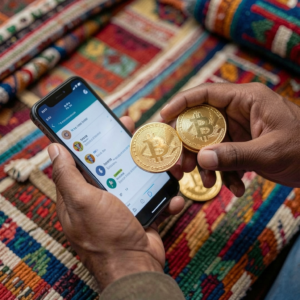
If implemented effectively, such frameworks could reduce friction in cross-border transactions, enhance transparency, and position Panama as a strategic gateway for crypto-powered commerce in Latin America.
Policy and infrastructure will define the next phase
Recent market conditions, including declining Bitcoin prices and reduced mining profitability, have exposed inefficiencies across global operations. In such environments, only regions with stable policies and competitive energy pricing can sustain growth. Latin America stands at a crossroads where aligning regulatory clarity with infrastructure development could unlock significant mining expansion.
The next 12 to 18 months will be critical. If economic conditions stabilize and regulatory barriers are reduced, the region has the potential to dramatically increase its share of global hashrate. Strong fundamentals are already in place- the outcome now depends on execution.
Latin America is no longer a peripheral player. It is becoming a core driver of both crypto adoption and the future geography of Bitcoin mining.
Disclaimer: The content of this article is for informational purposes only and does not constitute financial, investment, or trading advice. Readers should conduct their own research and consult a qualified cryptocurrency advisor before making any investment decisions.
Stay informed,
Rodcas Consulting Group